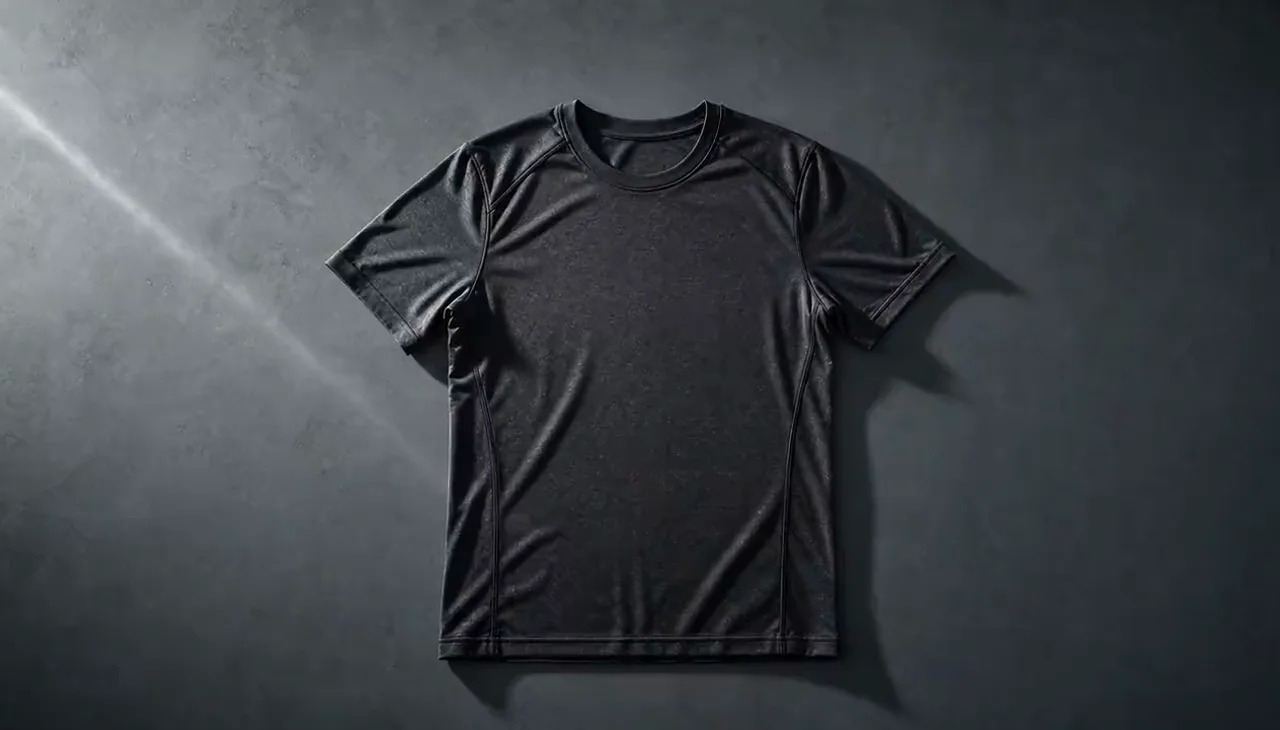
Flat reading · structure to movement
What can you actually train in this
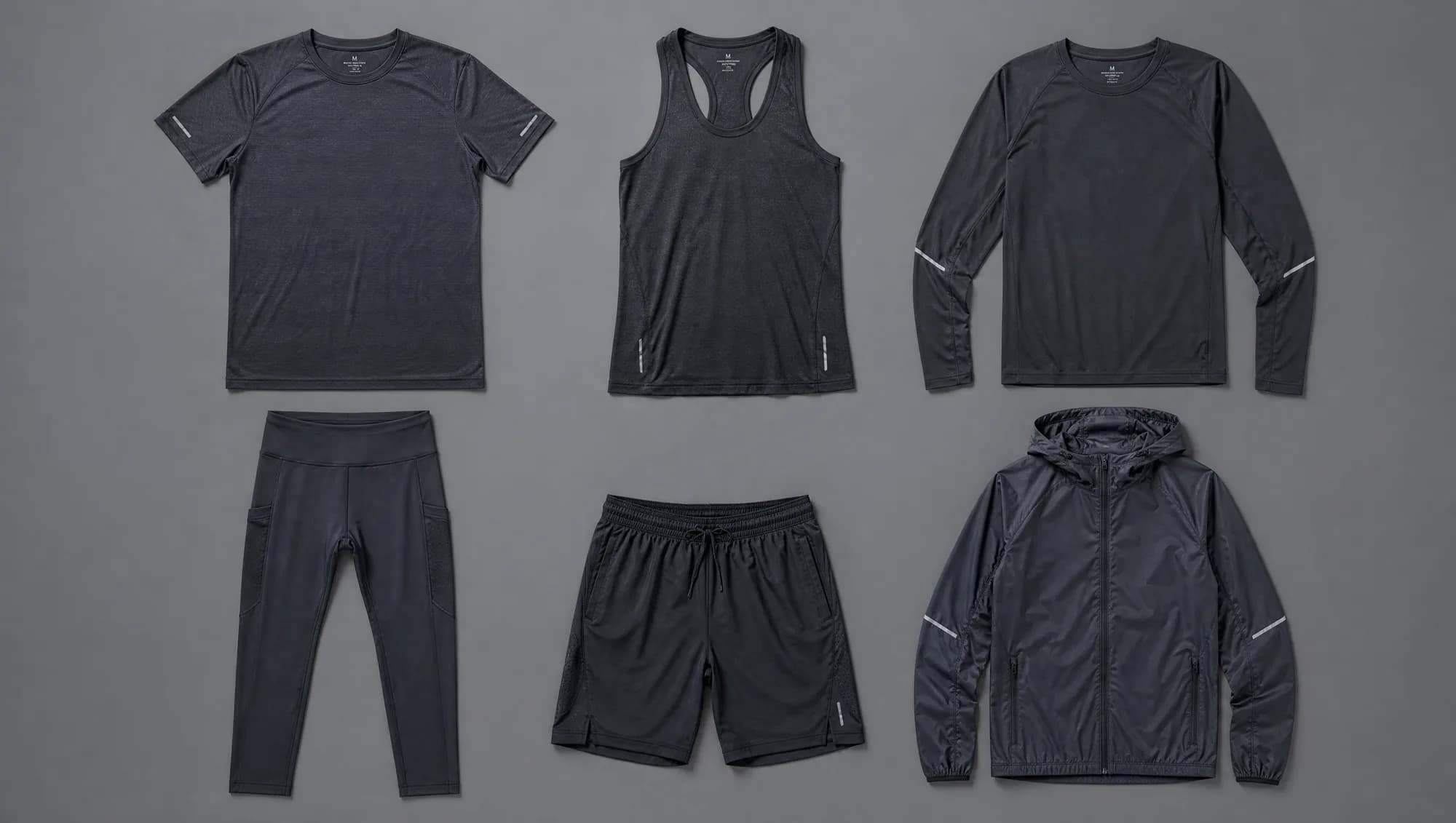
A product page tells you the fabric. It almost never tells you the cut — and the cut is what decides whether the hem stays down when the sleeves go up. Photograph the piece flat and Movespan reads the armhole, the seams, the vents, the hem and the waistband, then names the movements that cut can take and the ones it fights.
Garments only. We read how the piece is built — never how anyone looks in it.
Reading 001 · boxy cotton-blend tee
- Armhole
- High, set in
- Shoulder seam
- On the line
- Side vent
- None
- Hem
- Plain, no band
- Lining
- None
Five readings from one photograph. Four of the six movements below turn on two of them.
Try it · no account needed
One cut. Six movements. Both directions.
Select a piece of structure on the flat and the movements it decides light up. Select a movement and the structures responsible are marked back on the flat. Everything here is keyboard operable.
Flat reading · Boxy cotton-blend t-shirt
Five readings taken from one flat photograph. Select any of them, or select a movement in the matrix to work backwards.
| Movement | Verdict | Decided by |
|---|---|---|
| FAILS | High, close-cut armhole · Plain straight hem | |
| FAILS | Closed side seam, no vent | |
| FAILS | Closed side seam, no vent | |
| LIMITED | Plain straight hem | |
| LIMITED | Shoulder seam on the shoulder line | |
| FAILS | Closed side seam, no vent · Plain straight hem |
Nothing selected. Choose a structure on the left to see which movements it decides, or choose a movement above to see which structures decide it.
This reads the garment, not the wearing. A stretchier fabric or a looser size can change every one of these. The matrix above is computed in your browser from a fixed rule table. An image model reports what it can see on a flat photograph; it never decides a verdict.
What gets read
Six things on a flat photograph decide almost everything
None of these appear in a product description, and all of them are visible in a single overhead shot. Learn to read them once and you can read any garment on any product page — which is the whole point of the shopping list at the end of every reading.
 01
Armhole
Measure straight down from the shoulder seam to the lowest point of the curve. High and tight has no slack; deep and dropped has plenty.
 02
Seam path
Follow where the seam runs. On top of the shoulder, dropped past it, or diagonally to the neck as a raglan — each one pivots differently.
 03
Side vent
Look at the bottom of the side seam. A split, a bar-tack and a finished edge mean the hem can open. An unbroken seam means it cannot.
 04
Hem finish
Rib band, elastic, drawcord, bonded, or a plain coverstitched edge. Only the first four hold position.
 05
Waistband
Measure the band's depth and check whether the inner face is bonded or a separate elastic. Depth is what keeps it from rolling.
 06
Lining
Look for a second edge inside the hem or the leg opening. A liner is a second hem that can fold independently of the first.
Three steps
Flat photograph in, shopping list out
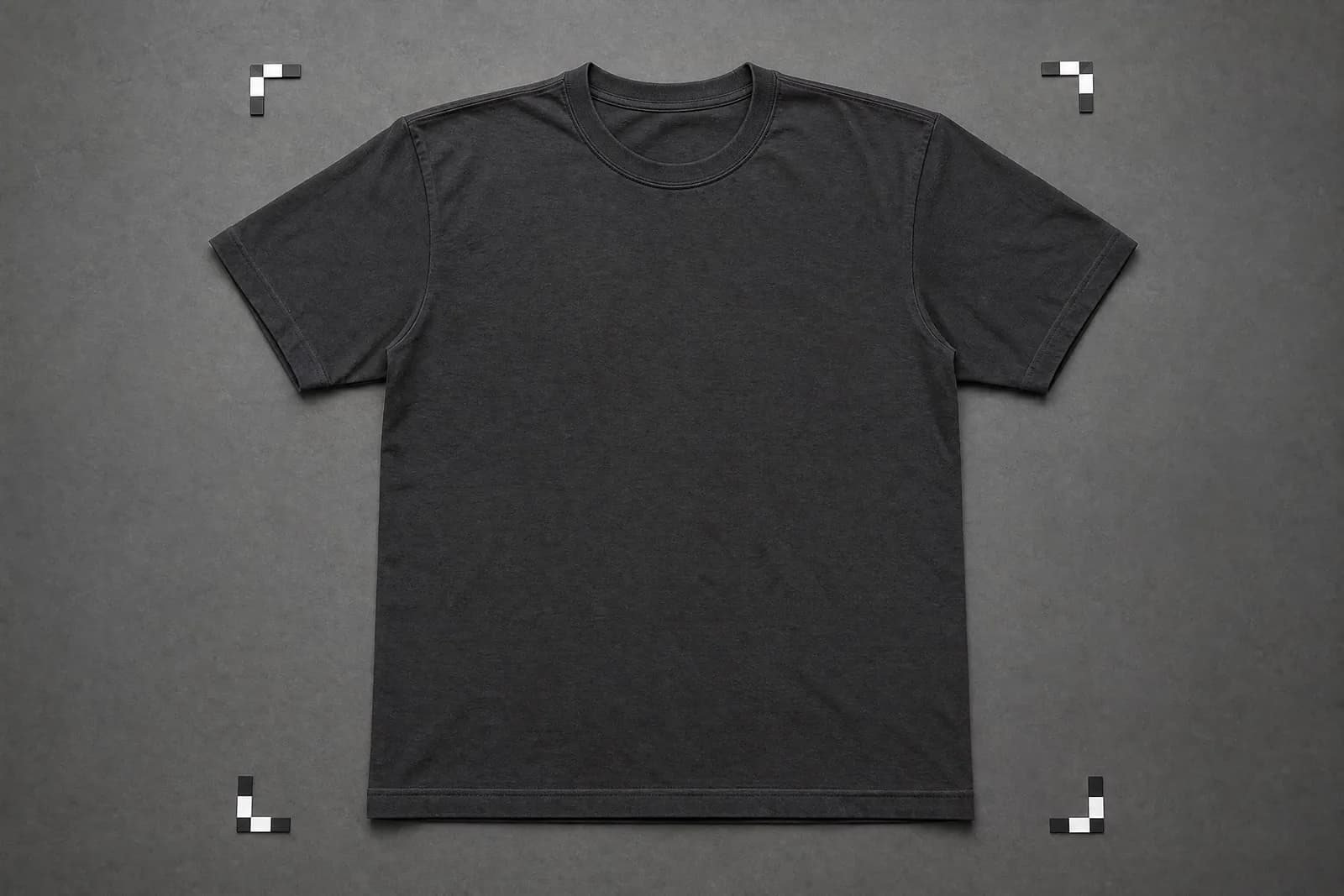
Step 01
Lay it flat and photograph it from above
Sleeves squared, hem straight, the whole piece in frame. That single flat shot carries the armhole depth, the seam paths, the hem finish and the waistband height.
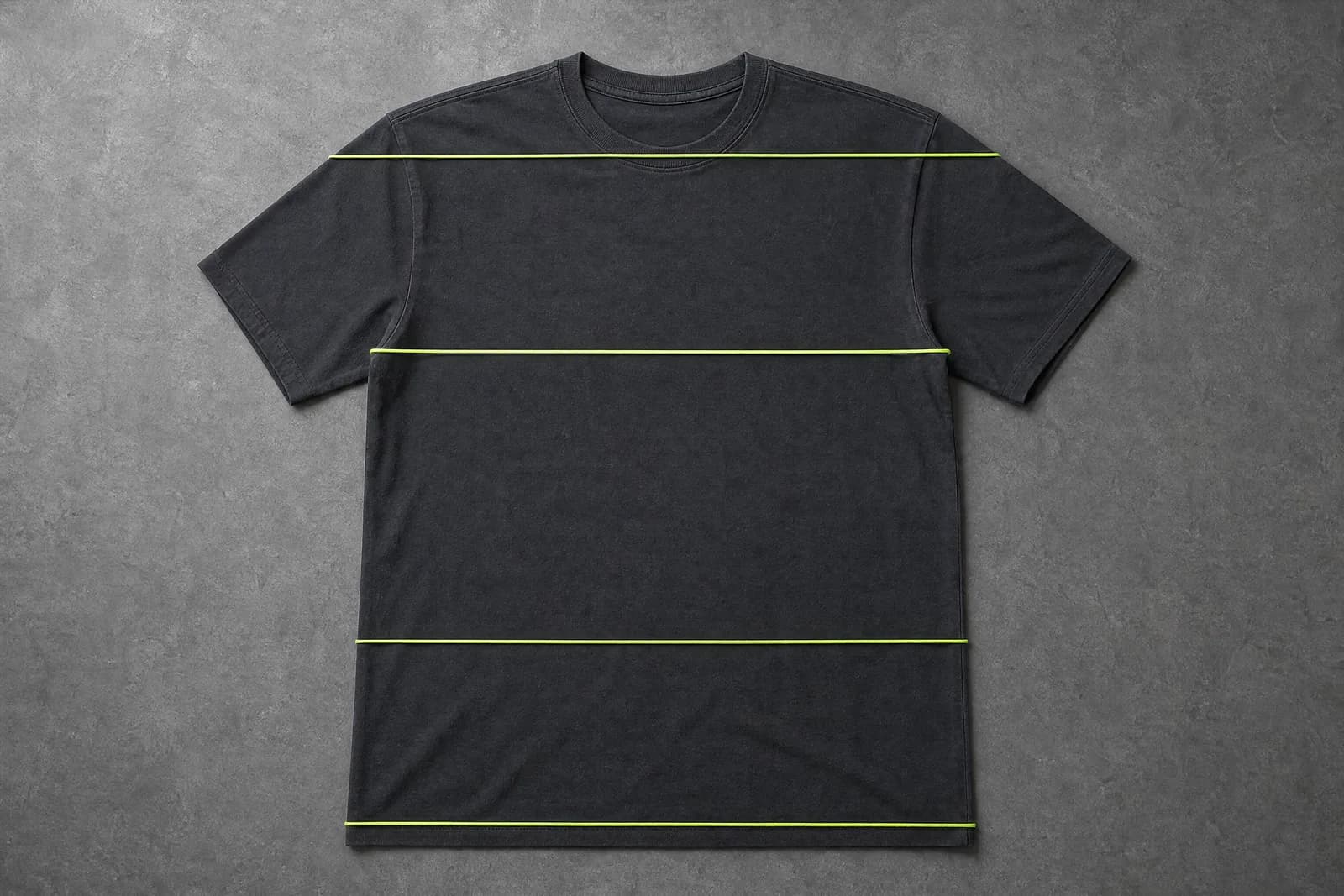
Step 02
Read the matrix
Six movements, three verdicts, and for every verdict the one piece of structure that produced it. The matrix is computed in your browser from a rule table you can read.
Step 03
Take the shopping list with you
The last section is the one you keep: which photographs to open on the next product page, and what you are looking for in each of them.
The other direction
Start from the movement instead
If you already know what you are buying the piece for, work backwards. Select the movement and the structures that decide it are marked on the flat — so you know which two photographs on the product page actually matter.
Overhead
The sleeves travel above the shoulder line. Everything attached to them is pulled upward with them.
Deep bend
The hips drop below the knee line. Fabric is stretched across the seat and compressed into folds at the waist.
Forward fold
The torso folds forward over the hips. The back rise reaches its limit and the front hem swings out.
Floor contact
The garment is pressed flat against the ground and dragged across it. Edges and seam allowances take the abrasion.
Sustained gait
A repeating stride and arm swing. The same three or four seams are loaded thousands of times in a row.
Inverted
The hem finishes above the shoulder line. Gravity pulls on every open edge in the wrong direction.
Flat reading · High-rise bonded leggings
Five readings taken from one flat photograph. Select any of them, or select a movement in the matrix to work backwards.
| Movement | Verdict | Decided by |
|---|---|---|
| HOLDS | Wide high-rise band, bonded inner face | |
| HOLDS | Wide high-rise band, bonded inner face · Diamond gusset at the crotch | |
| HOLDS | Wide high-rise band, bonded inner face · Diamond gusset at the crotch | |
| LIMITED | No inner liner | |
| HOLDS | Diamond gusset at the crotch · Bonded ankle cuff | |
| HOLDS | Wide high-rise band, bonded inner face · Bonded ankle cuff |
Nothing selected. Choose a structure on the left to see which movements it decides, or choose a movement above to see which structures decide it.
Readings
Four pieces, four matrices
Every garment below is photographed flat and unworn. Every verdict beside it comes out of the same rule table you just used.
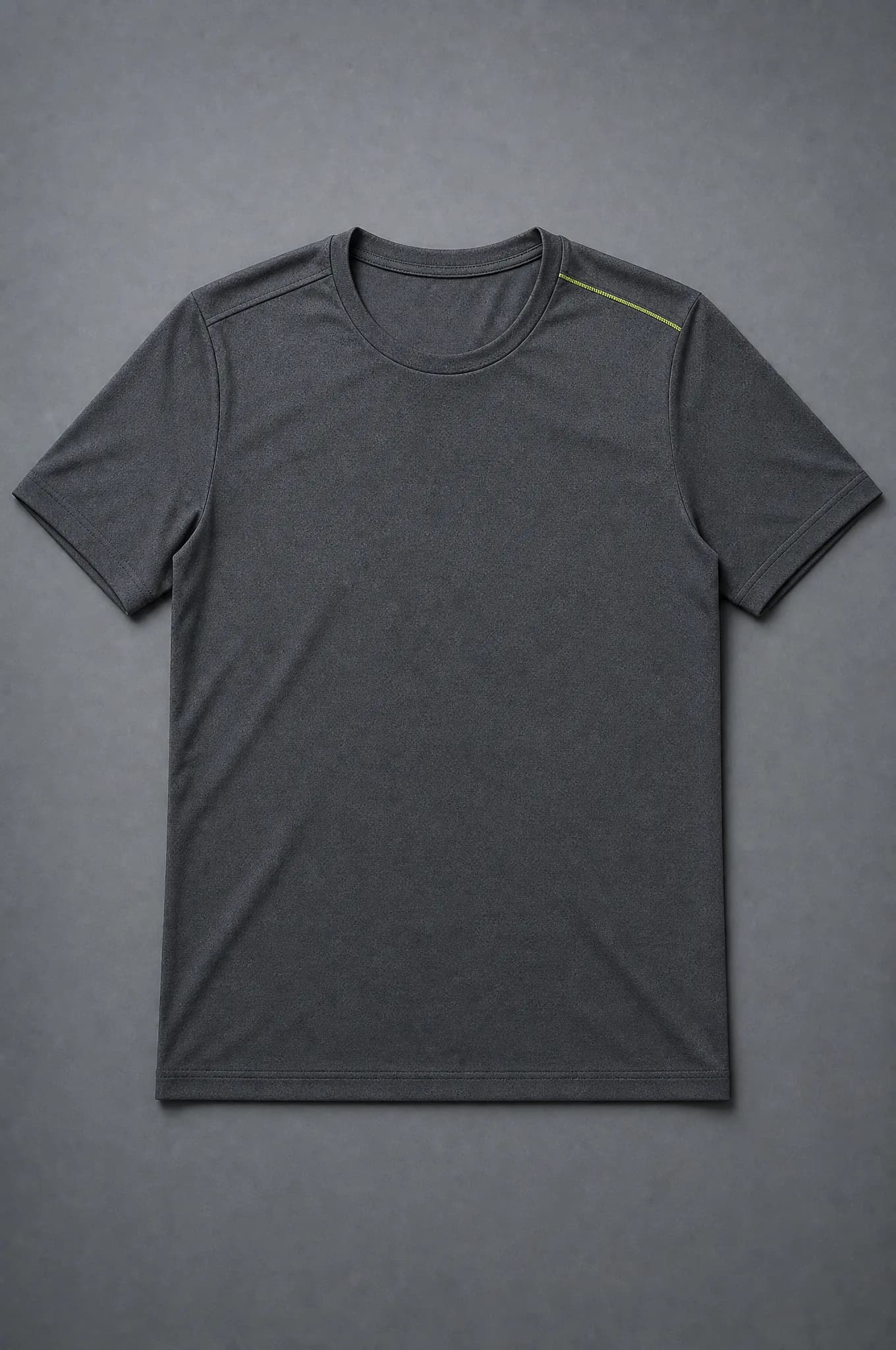
Boxy cotton-blend t-shirt
Cut for standing still. Four of the six movements pull on something this shirt has no answer for.
Movement matrix for the Boxy cotton-blend t-shirt Movement Verdict Overhead FAILS Deep bend FAILS Forward fold FAILS Floor contact LIMITED Sustained gait LIMITED Inverted FAILS 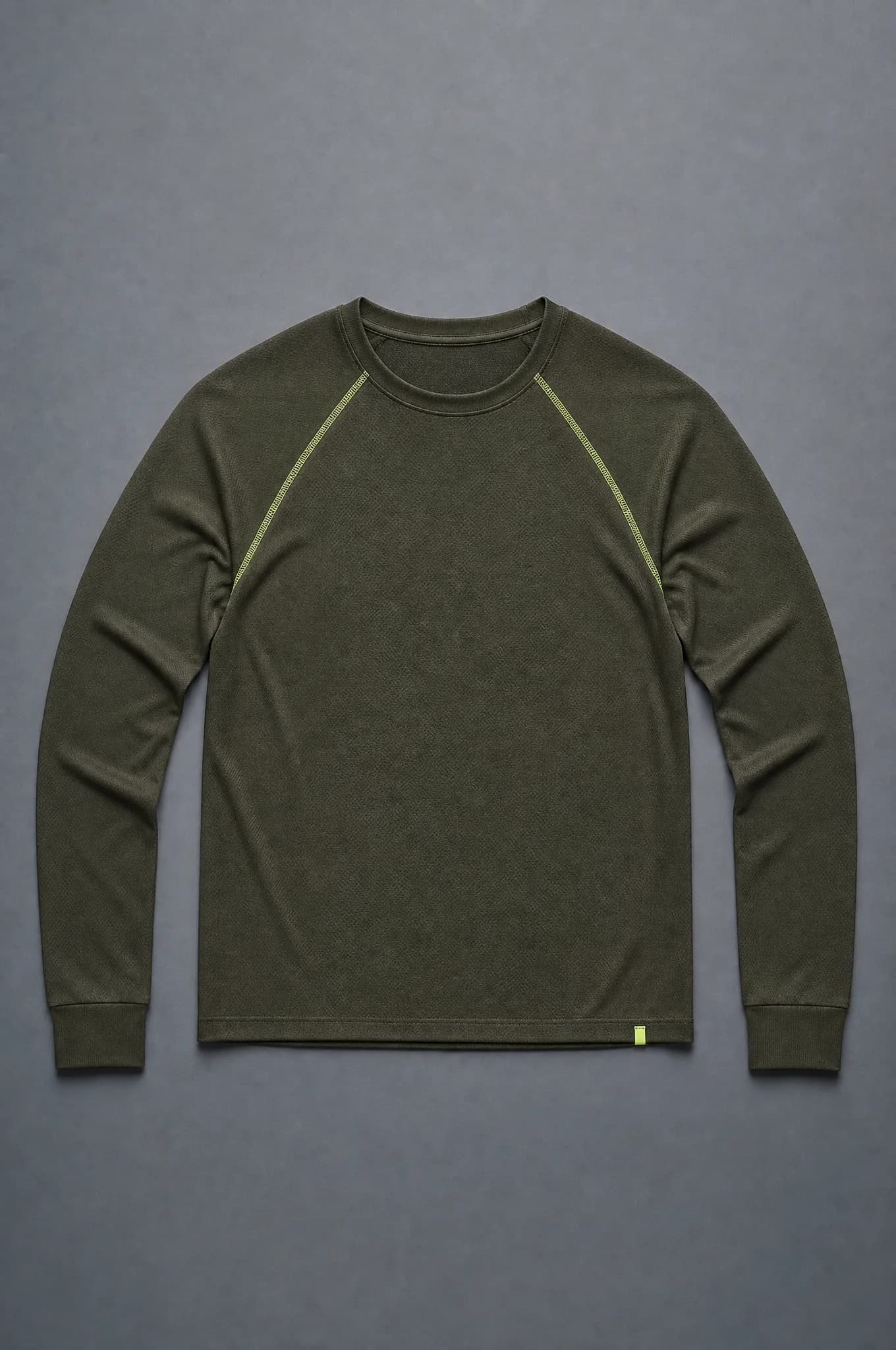
Raglan long-sleeve with ribbed hem
The two structures that usually cause the trouble — the set-in armhole and the plain hem — have both been replaced here.
Movement matrix for the Raglan long-sleeve with ribbed hem Movement Verdict Overhead HOLDS Deep bend LIMITED Forward fold LIMITED Floor contact HOLDS Sustained gait HOLDS Inverted HOLDS 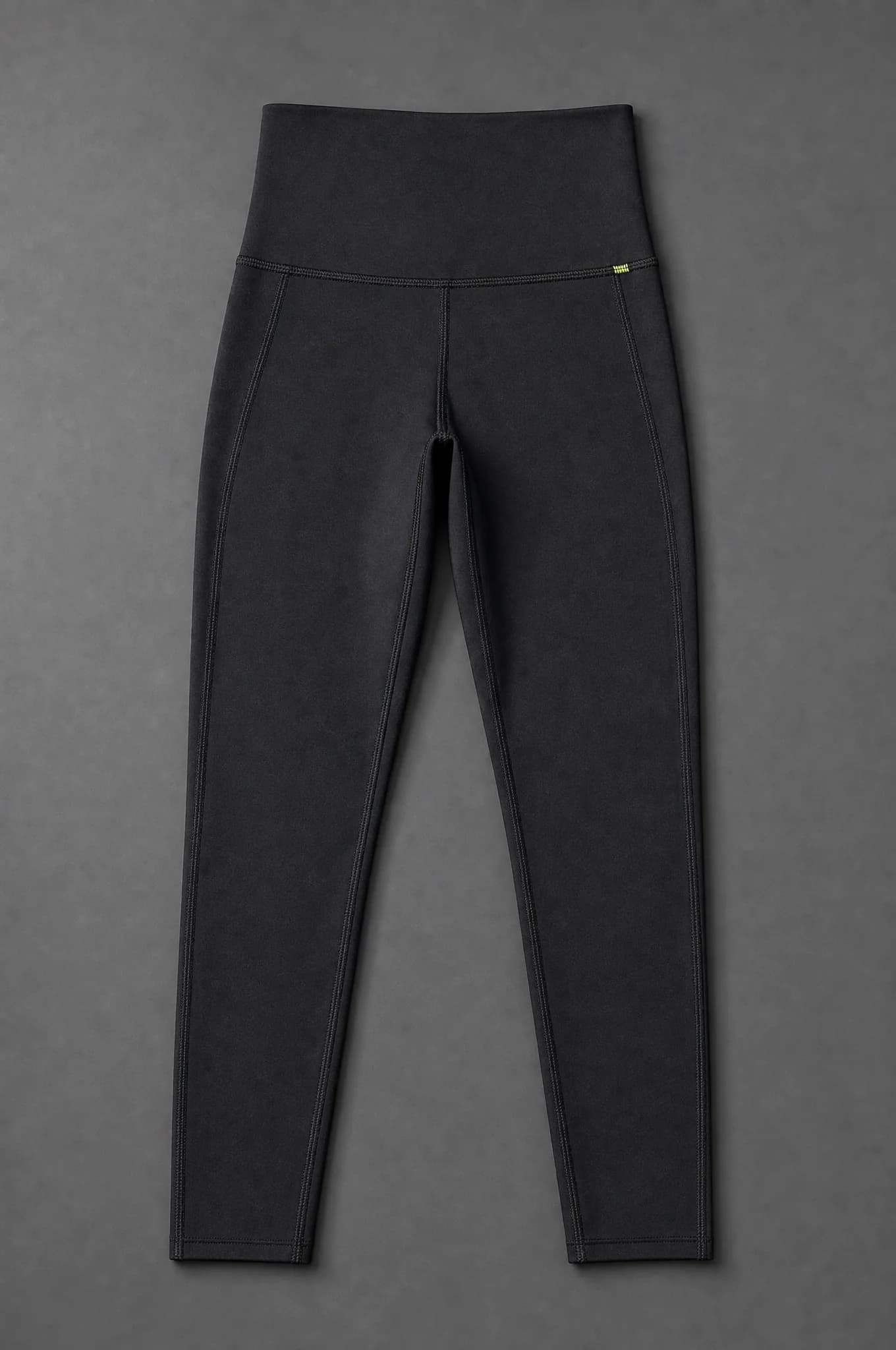
High-rise bonded leggings
Built around the two structures that decide everything below the waist: how deep the band is and whether there is a gusset.
Movement matrix for the High-rise bonded leggings Movement Verdict Overhead HOLDS Deep bend HOLDS Forward fold HOLDS Floor contact LIMITED Sustained gait HOLDS Inverted HOLDS 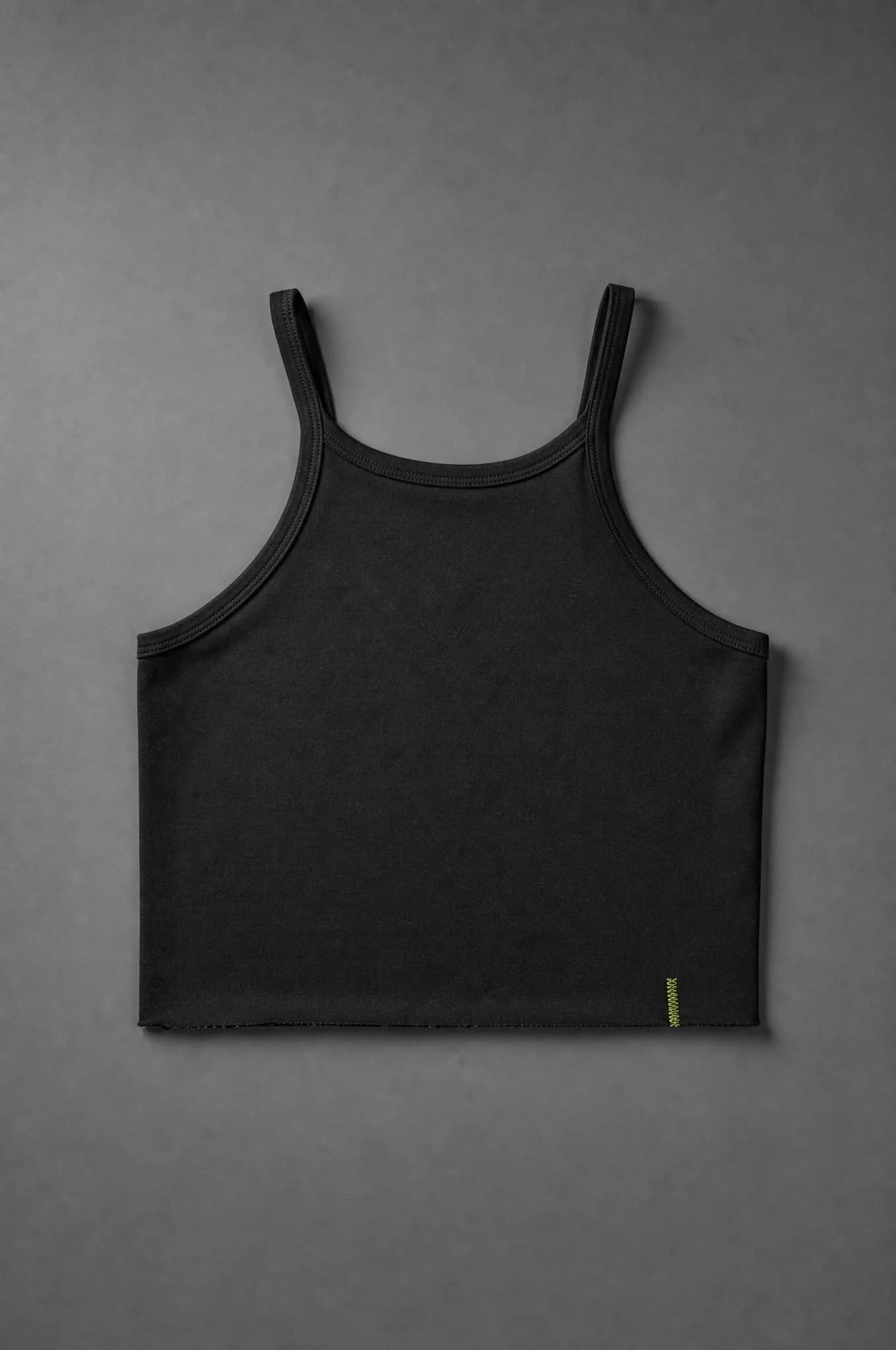
Cropped raw-edge tank
The armhole is generous and the hem is not. One of those two decides almost every verdict here.
Movement matrix for the Cropped raw-edge tank Movement Verdict Overhead FAILS Deep bend LIMITED Forward fold FAILS Floor contact LIMITED Sustained gait LIMITED Inverted FAILS
What a reading cannot know
- How much the fabric actually stretches, and how much of that stretch it recovers.
- The size you chose, and how that size falls compared with the one photographed.
- How far you take the movement — the same cut behaves differently at different range.
- How the piece behaves once it is damp, and how the fabric changes after washing.
This reads the garment, not the wearing. A stretchier fabric or a looser size can change every one of these.
Plans
Two movements free. Six when the whole boundary matters.
A free reading answers one specific worry — overhead and the deep bend. The paid line is where the matrix becomes a boundary rather than an answer: it is only with all six that you find out the forward fold and the inversion fail too, for a reason you had not thought to check.
Free
$0USD
50 credits a month
Two movements, five garments a month
- Overhead and deep bend only
- Five readings a month
- Watermarked matrix image
Span
Most complete$8USD · per month
400 credits a month
All six movements, unlimited garments
- The full six-movement matrix
- Structure annotation on your own photograph
- The shopping list for every reading
- No watermark, unlimited garments
Rig
$24USD · per month
1,500 credits a month
Compare pieces and keep a wardrobe file
- Everything in Span
- Side-by-side comparison across pieces
- Group readings by activity
- A saved wardrobe file
Prices are in United States dollars and exclude tax; sales tax is added at checkout where applicable. Credits are an allowance for using the service — they are not money, they carry no cash value and they do not roll over. There are no credit packs and no stored balances.Full plan detail
Questions
The ones worth asking first
If yours is not here, write to support@drvynapparel.shop or call +1 267 687 1011.
Can I upload a photograph of me wearing it?
No. There is no such upload on this site and there is no plan to build one. Movespan accepts one kind of image: a garment lying flat, empty and unworn. Anything that appears to contain a person is rejected before analysis rather than analysed and discarded.
This is the boundary the whole product is built around. We read how a piece is constructed. We do not look at anyone, we do not produce any image of anyone, and we do not offer any content about shape, size or appearance.
This movement makes my lower back hurt — is it the garment?
We do not answer that, and the tool will not try. Anything to do with pain, injury or rehabilitation belongs with a physiotherapist or a doctor, not with a clothing tool. If a request mentions pain or injury, the analysis is skipped entirely and you get that referral instead of a matrix.
Movespan answers one question only: whether the way a garment is cut can take a movement. It does not teach movements, write programmes, correct anything, or assess anyone.
What happens to the photographs I upload?
They are stored only for as long as your reading exists, and you can delete any reading and its photograph from the workspace at any time. Deleting a reading removes the stored image.
Your photographs are not used to train any model, not ours and not a third party's. See the privacy policy for retention periods and the deletion path.
How accurate is this?
The verdicts are produced by a fixed rule table that maps structure to movement, not by a model improvising an answer. A model's only job is to report what it can see on the flat — how deep the armhole is, whether there is a vent, how the hem is finished. If it misreads the photograph, the matrix will be wrong, which is why every verdict names the structure it came from so you can check it against the piece in front of you.
This reads the garment, not the wearing. A stretchier fabric or a looser size can change every one of these. We make no assurance that a garment will not ride up, and none that a piece suits every movement. See how the reading works.
What is your refund policy?
Cancel at any time. Your plan stays active until the end of the period you have already paid for, and we do not refund part of a period. There is no statutory cooling-off period for online digital services in the United States, so what applies is the policy published on this site — and once published, we are bound by it.
If the service did not work as described, write to support@drvynapparel.shop and we will deal with it. Full terms on the refunds and cancellation page.
How do I cancel?
In your account, in two clicks: open Plan and billing and select Cancel plan, then confirm. There is no telephone call, no email request, no support ticket and no sequence of offers to sit through. Cancelling is exactly as easy as subscribing was.
Do credits roll over? Can I buy more?
Credits do not roll over — each month starts at your plan's allowance. There are no credit packs, no top-ups and no stored balances, so there is never an unused balance sitting in your account. If you run out, you can move to a larger plan or wait for the next period.
Credits are an allowance for using the service. They are not money, not stored value, cannot be redeemed for cash and cannot be transferred.
Is there an age restriction?
Yes. Movespan is not offered to anyone under 13, and we do not knowingly collect any information from a child under 13. If you believe a child has created an account, write to support@drvynapparel.shop and it will be removed.
Why is there no video of the movements?
Because a demonstration of a movement has to show someone doing it, and this product does not show anyone. That is not an oversight — it is the same rule that keeps figures out of the illustrations and photographs of people out of the wall. The answer here is a matrix you compare in one glance, not six clips you watch in sequence.
Next garment
Lay it flat. Find out what it fights.
Two movements are free and no card is needed to start. If the matrix tells you the piece was wrong before you cut the tag off, that is the whole return saved.